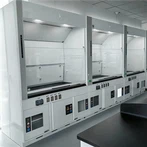
Laboratory countertop is a crucial part of the laboratory, which not only provides a platform for experimental operations, but also relates to the accuracy and safety of experiments. Laboratory countertops can be categorized according to material, performance and application scenarios.
First of all, according to the material classification, laboratory countertops can be divided into physical and chemical boards, epoxy resin boards, ceramic boards, stainless steel boards and so on. Physical and chemical boards have good corrosion resistance and high temperature resistance and are suitable for various chemical experiments. Epoxy resin plate, on the other hand, has excellent antibacterial properties and is suitable for biological laboratories. Ceramic plate is wear-resistant and scratch-resistant, suitable for high temperature and heavy experiments. Stainless steel plate is corrosion-resistant and easy to clean, suitable for food and pharmaceutical laboratories.
Second, according to the performance classification, laboratory countertops can be divided into heat-resistant, corrosion-resistant, antibacterial and so on. Heat-resistant countertops can withstand high-temperature experiments, such as burning alcohol lamps. Corrosion-resistant countertops can resist the erosion of chemical reagents, such as strong acid, strong alkali. Antibacterial countertops can effectively inhibit the growth of bacteria and keep the experimental environment clean.
In addition, laboratory countertops can be categorized according to the application scenarios. For example, central lab bench, side bench, instrument bench and so on. The central lab bench is the core area of the laboratory, usually used for large and complex experimental operations. Side benches are used for auxiliary experiments or temporary storage of experimental equipment. Instrument benches are specifically used to hold precision instruments and equipment and require stable support and shock absorption.
When choosing a lab benchtop, you need to consider factors such as the type of experiment, experimental environment and budget. Choosing the right laboratory countertop can not only improve the efficiency of the experiment, but also protect the safety of the experimenters. At the same time, regular maintenance and repair of laboratory countertops is also an important measure to ensure its performance and longevity.
Translated with DeepL.com (free version)