Optimizing Laboratory Efficiency: In-depth exploration of the design and application of Lab Bench Top
In the world of scientific research and experimentation, Lab Bench Top (laboratory workbench) is not only a platform for carrying experimental equipment, but also the cornerstone of scientific research innovation and experimental efficiency improvement. With the advancement of science and technology and the diversification of experimental needs, the design and application of Lab Bench Top are also constantly evolving to meet the pursuit of efficient, safe and comfortable experimental environment by scientific researchers.
1. Design features of Lab Bench Top
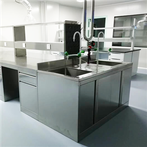
The design of Lab Bench Top usually focuses on practicality, durability and ergonomic principles. Its sturdy structure can withstand the weight of experimental equipment and the impact of daily operations. At the same time, the height, width and tilt angle of the workbench can be customized according to the experimental needs to ensure that scientific researchers can maintain a comfortable posture while working and reduce fatigue and discomfort. In addition, the surface of the workbench is usually made of corrosion-resistant and easy-to-clean materials such as stainless steel, epoxy resin or high-density polyethylene to adapt to the splashing and cleaning needs of various chemical reagents.
2. Material selection and functional configuration
The material selection of Lab Bench Top is crucial, which is directly related to the durability and safety of the workbench. High-quality materials can not only resist the corrosion of chemical reagents, but also ensure that the workbench remains flat and stable during long-term use. In addition, the functional configuration of modern Lab Bench Top is also increasingly rich, including integrated power sockets, gas interfaces, ventilation systems, lighting systems, etc. to support complex experimental operations and experimental safety. These functional configurations not only improve experimental efficiency, but also ensure the safety of experimental personnel.
3. Application of Lab Bench Top in the laboratory
Lab Bench Top has a wide range of applications in laboratories, including but not limited to chemical laboratories, biological laboratories, physical laboratories, and teaching laboratories. In chemical laboratories, the workbench is used to carry various chemical reagents, glassware and experimental equipment to support experiments such as chemical synthesis and analytical testing. In biological laboratories, workbenches are used for cell culture, microbiological experiments, etc., and usually need to be equipped with equipment such as biosafety cabinets and centrifuges. In physical laboratories, workbenches need to meet the needs of precision measurement and experimental equipment, such as optical platforms and mechanical test benches. In teaching laboratories, workbenches are used as platforms for teaching and experimental demonstrations, and need to be easy to operate, safe and reliable.
4. Choose a Lab Bench Top that suits your own laboratory needs
When choosing a Lab Bench Top, you should consider factors such as the specific needs of the laboratory, the type of experiment, the experimental equipment, and the number of experimental personnel. At the same time, you also need to pay attention to the material, structure, functional configuration, and ergonomic design of the workbench. By deeply understanding the diversity and customization of Lab Bench Top, readers will be able to better choose a workbench that suits their own laboratory needs, thereby optimizing the experimental process and improving scientific research efficiency.
In summary, as the core infrastructure of the laboratory, the design and application of Lab Bench Top are of great significance to improving experimental efficiency and safety. By choosing a workbench that suits the needs of their own laboratories, researchers will be able to better tap the potential of the laboratory bench and promote scientific research innovation and experimental efficiency.