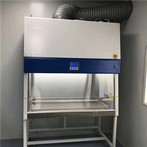
In today's rapidly changing biotechnology, laboratory biosafety has become an important link that cannot be ignored in scientific research activities. The biosafety cabinet is the crucial technological guardian in this link. With its precise design and efficient performance, it provides scientific researchers with a "safety cabin" that can effectively isolate biohazardous substances and keep the experimental environment sterile.
1. Design principle: precise airflow control, building a safety line of defense
The core of the design of the biosafety cabinet lies in its precise airflow control system. Through the triple protection of inhaled airflow, downflow and exhaust airflow, the biosafety cabinet can form an invisible "safety net" during the experiment. The inhaled airflow inhales the air in the experimental area (including the microbial aerosols that may be carried) and purifies it through the high-efficiency particulate air (HEPA) filter; the downflow forms a "barrier" in the cabinet to effectively prevent external pollutants from entering; and the exhaust airflow is responsible for discharging the purified air out of the cabinet to ensure the continuous cleanliness and safety of the experimental environment.
2. Functional characteristics: multiple protections to ensure experimental safety
The biosafety cabinet not only has precise airflow control functions, but also has a variety of safety features. For example, its unique sealing design can effectively prevent the leakage of harmful substances; the intelligent control system can monitor the environment in the cabinet in real time to ensure that all parameters are within a safe range; in addition, the biosafety cabinet is also equipped with auxiliary equipment such as ultraviolet disinfection lamps, which further enhances its protection capabilities.
3. Application scenarios: wide coverage to meet diverse needs
The application scenarios of biosafety cabinets in the field of biotechnology are extremely wide. Whether it is high-risk experiments such as vaccine development, genetic engineering, disease diagnosis and treatment, or routine experiments such as cell culture and microbial culture, biosafety cabinets can provide necessary protection. At the same time, according to the different experimental risk levels, biosafety cabinets are also divided into multiple types such as Class I, Class II (A1, A2, B1, B2) and Class III to meet the needs of different experimental scenarios.