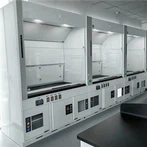
Laboratory furniture and fume hoods are integral components of any modern scientific research or educational laboratory. These specialized pieces of equipment not only facilitate the smooth conduct of experiments but also ensure the safety and well-being of laboratory personnel, as well as the preservation of the delicate equipment housed within.
Laboratory Furniture: The Backbone of Scientific Endeavors
Laboratory furniture is designed with meticulous attention to detail, catering to the unique needs of scientific work. From sturdy workbenches and adjustable-height stools to spacious storage cabinets and specialized reagent shelves, every piece is crafted to withstand the rigors of daily use while maintaining a clean and organized work environment. Workbenches, for instance, often feature chemical-resistant surfaces that can withstand spills and easy-to-clean materials, minimizing the risk of contamination and facilitating the swift clean-up of accidents.
Storage cabinets and drawers are organized to hold various laboratory supplies, reagents, and equipment, ensuring quick access and minimizing clutter. This not only enhances productivity but also promotes safety by reducing the likelihood of mishaps caused by disorganized workspaces. Moreover, many laboratory furniture pieces are designed to be modular and customizable, allowing researchers to tailor their workspaces to their specific requirements.
Fume Hoods: Guardians of Air Quality and Safety
Fume hoods, on the other hand, play a vital role in protecting laboratory personnel from harmful gases, vapors, dust, and particulate matter generated during experiments. Essentially, they are enclosed workstations ventilated by a fan system that draws contaminated air away from the operator and expels it safely out of the building. This process, known as exhaust ventilation, helps maintain a safe and healthy working environment by preventing the accumulation of hazardous airborne contaminants.
Fume hoods come in various sizes and configurations to suit different experimental needs. Some are designed for specific applications, such as those requiring specialized ventilation for radioactive materials or flammable gases. Modern fume hoods are equipped with sensors that monitor air flow and sash position, ensuring optimal performance and alerting users to potential issues. Additionally, many fume hoods feature energy-efficient designs that minimize energy consumption while maintaining necessary levels of ventilation.
Conclusion
In conclusion, laboratory furniture and fume hoods are indispensable tools for any research or educational laboratory. By providing a safe, organized, and efficient workspace, they enable scientists and researchers to focus on their work without worrying about the potential hazards associated with conducting experiments. As such, investing in high-quality laboratory furniture and fume hoods is a smart decision that can significantly contribute to the success and longevity of any laboratory.