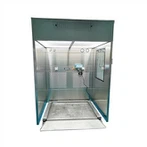
Laboratory utensil cabinets are an integral part of a science laboratory. They are not only an important part of the internal structure of the laboratory, but also a safe storage place for various instruments, medicines and chemicals during experiments. In the laboratory, utensil cabinets play an important role in protecting laboratory members and experimental materials.
First of all, the utensil cabinet provides an orderly storage space, where various utensils, reagent bottles, measuring cylinders, etc. required for experiments can be neatly placed according to categories and labels. This will not only make it easier for the experimenter to quickly find the materials they need, but also reduce confusion and errors during the experiment.
Secondly, the utensil cabinet has a protective function. They are usually made of sturdy materials and can effectively prevent experimental materials from being contaminated and damaged by the external environment. Cabinet doors are usually designed with locks to restrict unauthorized personnel from accessing experimental materials and ensure laboratory safety.
In addition, the utensil cabinet can also play the role of explosion-proof and fire-proof. In experiments, some volatile or flammable chemicals may be used. These chemicals may cause accidents if they are not stored and handled correctly. The design of utensil cabinets usually takes these factors into consideration, which can reduce the risk of chemical leakage or explosion to a certain extent and ensure the safety of laboratories and experimental personnel.