ASHRAE stipulates that laboratory air conditioning and ventilation design parameters include the following:
1) Indoor and outdoor temperature and humidity requirements;
2) air quality;
3) Equipment and process heat load, including sensible heat and latent heat;
4) Anticipated increase in internal loads;
5) The minimum number of air changes;
6) Air intake and replenishment;
7) Type of exhaust equipment;
8) Control and alarm;
9) The size and number of fume hoods may be adjusted;
10) Room pressure difference;
11) Backup of equipment and power supply.
1. Choice of ventilation times
The "Code for Design of Heating, Ventilation and Air Conditioning Regulation in Chemical Industry" stipulates that the minimum air exchange volume of the laboratory room is generally 6 times/h~8 times/h. ASHRAE stipulates that the overall air change frequency in the laboratory should be determined by the following air volume: the total air volume exhausted from local exhaust equipment or other room exhaust; the cooling air volume required to take away the heat load of the room; the minimum air change frequency requirement. In the case of use, the minimum number of air changes in the laboratory should be maintained at 6 times/h~10 times/h.
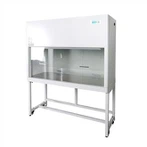
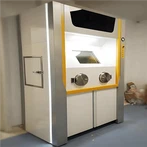
Room air changes >10/h are considered appropriate under normal circumstances. However, when there are analytical equipment that may generate high heat load in the laboratory, or there is a large amount of local exhaust air in the room, it may be necessary to increase the air exchange rate accordingly. The wet chemistry room has a fume hood and the heating room has a large number of furnaces. The calculation method of the fume hood is based on the "Code for Design of Heating, Ventilation and Air Conditioning Regulations in Chemical Industry" for lightly, moderately harmful or dangerous hazardous substances. Speed 0.5m/s. For the utilization rate of fume hoods, when the number of fume hoods is greater than 2, the simultaneous utilization rate of 60%~70% should be taken. The heating furnace calculates the required exhaust air volume based on the heat balance law to maintain the heating temperature in the furnace. Through the above, the total safe ventilation volume can be calculated. In addition, the air-conditioning air volume calculated by the load is compared with the minimum number of air changes of 10 times, and the maximum value of the three is taken.
2. Air supply and exhaust form
The "Code for Design of Heating, Ventilation and Air Conditioning Regulation in Chemical Industry" stipulates that when the exhaust air volume of the laboratory is large, an outdoor fresh air supplementary air system should be installed and included in the fresh air load.
The "Science Laboratory Building Design Code" stipulates that each exhaust device should be equipped with an independent exhaust system. All exhaust devices in the same laboratory should share one exhaust system. Laboratories that use the exhaust system continuously during working hours should be equipped with an air supply system. The air supply volume should be 70% of the exhaust air volume, and the air supply should be purified according to the process requirements. For heating areas, the supply air should be heated in winter. The supply air flow should not disrupt the normal operation of the laboratory exhaust.
ASHRAE stipulates that all gases discharged from the chemical laboratory must be directly discharged outside, and cannot be recycled. Therefore, unless the chemical laboratory also has cleaning requirements, it needs to be kept at a negative pressure relative to the adjacent area. Whether to choose a 100% fresh air supply system should be an important part of the laboratory risk assessment. Each unit of the laboratory is equipped with an independent exhaust system, and the exhaust is installed on the roof. The wet chemical room and heating room must be treated with fresh air due to the production of toxic, corrosive, and high-temperature gases. 100% fresh air supply system is not the only option for other general laboratory rooms where staff conduct computer analysis and constant temperature and humidity rooms for material testing. Because of the different process functions of the laboratory, fresh air ventilation or fresh air air handling is not necessarily required. Satisfying the process can only be the first priority. 100% fresh air is aimed at the environment of the fume hood, but for general laboratory circulating air treatment that can meet the requirements, 100% fresh air is not necessary. What's more, in the fresh air-conditioned environment, the energy consumption is very high.
3. Room differential pressure
The "Code for Design of Heating, Ventilation and Air Conditioning Regulation in Chemical Industry" stipulates that the laboratory should maintain a relatively negative pressure.
ASHRAE stipulates that all gases discharged from the chemical laboratory must be directly discharged outside, and cannot be recycled. Therefore, unless the chemical laboratory also has cleaning requirements, it must be kept at a negative pressure relative to the adjacent area. This regulation actually depends on the specific implementation object. The constant temperature and humidity room in this project requires strict temperature and humidity control ranges, and should be designed as positive pressure. Because if it is designed as a negative pressure, the air in the adjacent area will enter. On the one hand, it may destroy the control of temperature and humidity; on the other hand, if polluted air enters, it may also cause safety problems. For wet chemical rooms and heating rooms, in order to prevent toxic, corrosive, high-temperature gases or volatiles from being emitted into the room, or even to other areas, it is necessary to design it as a negative pressure. Office areas of laboratory buildings should always maintain a positive pressure relative to corridors and laboratories. The airflow in the laboratory should flow from low-risk areas to high-risk areas, and finally exhausted to the outside through various fume hoods or heating equipment.