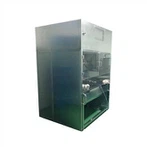
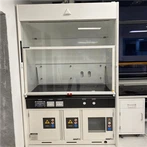
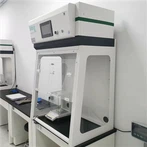
1. Fume hood
(1) Chemicals cannot be stored in and below the fume hood.
(2) Before use, check whether the ventilation system and other functions in the fume hood are operating normally. If a fault is found, do not carry out the experiment, close the cabinet door immediately and contact the maintenance personnel for inspection.
(3) The operation should be carried out at least 15cm away from the fume hood; during operation, the large-scale movements in the fume hood and in front of the adjustment door should be minimized.
(4) Do not block the opening of the fume hood and the inner row of the cabinet with objects.
(5) Regularly test the ventilation capacity of the fume hood to ensure the ventilation effect.
(6) During the experiment, the head and upper body of the personnel must not be stretched into the fume hood; the operator should adjust the glass window to the elbow so that the above chest is protected by the glass window.
(7) When personnel are not operating, make sure that the glass window is closed.
(8) After each use, the workbench and instruments should be thoroughly cleaned. For contaminated fume hoods, obvious warning signs should be hung and other personnel should be informed to avoid unnecessary injuries.
2. Emergency shower eyewash device
(1) The emergency spray eyewash has both a spray system and an eyewash system.
(2) In an emergency, press the switch valve (or foot pedal) by hand, and the eyewash water will automatically spray out from the eyewash device; pull the lever by hand, and the water will automatically spray out from the sprinkler head. Wash your eyes and face for at least 10 or 15 minutes.
(3) When the eyes or face are injured by chemical hazards, the eyes or face can be flushed with an emergency eye washer first; when a large amount of chemicals are splashed on the body, the whole body can be sprayed with an emergency sprayer first, Go to the hospital for treatment as soon as possible if necessary.