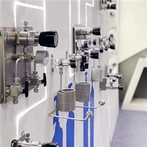
1. The laboratory should have sufficient ventilation and ventilation equipment, as well as exhaust pipes for experimental exhaust gas, to keep the air in the laboratory fresh and clean;
2. The laboratory should be equipped with freezers to store samples and reagents;
3. The laboratory should be equipped with safes to store highly toxic and temperature-sensitive chemicals;
4. Areas with different functions inside the laboratory, especially the places where the analysis of environmental pollutants with high toxicity and "three effects" should be separated and clearly marked to distinguish them;
5. Control the interference of personnel, equipment and analysis items entering different areas, such as using warning signs or access control to avoid crossover or external interference in the laboratory environment.
5. Prohibit contact with water in high temperature experiments. If water is mixed into a high-temperature object, the water will vaporize rapidly, and a so-called water vapor explosion will occur. When high-temperature substances fall into water, a large amount of explosive water vapor is also generated and splashed around.
6. All flammable and explosive items (such as hydrogen, nitrogen, oxygen, etc.) stored in the laboratory must be kept at a certain distance from fire sources and power sources, and must not be stacked at will. In laboratories where flammable and explosive materials are used and stored, smoking is strictly prohibited.
7. Do not connect and pull wires indiscriminately, do not overload electricity, do not have exposed wire ends in the laboratory, and use metal wires instead of fuses; do not stack items in the power switch box.
8. Electrical equipment and lines, plugs and sockets should be checked frequently to keep them in good condition. If sparks, short circuits, heat generation, insulation damage, aging, etc. are found, the electrician must be notified for repairs. Electric heaters, electric ovens and other equipment should be cut off when people walk.
9. When using an electric soldering iron, it should be placed on a non-combustible heat-insulating support, and no combustibles should be piled up around it. Pull out the power plug immediately after use.
10. Combustible gas cylinders and combustion-supporting gas cylinders must not be placed together. Various cylinders must not be placed close to heat sources or open flames. Sun protection measures must be taken. Collision and knocking are prohibited. The paint marks must be kept intact. Special cylinders are used exclusively.
11. Without approval and filing in the laboratory, high-power electrical equipment shall not be used to avoid exceeding the electrical load.
12. It is strictly forbidden to pile up items on the corridors in the building to ensure the smooth flow of fire protection.
13. For instruments used in long-term rotation, it is necessary to regularly check the appearance, whether the exposed wires are deformed by heat, and whether they react with the surrounding medium. On-site real-time detection is required, or reliable safety instruments are used to detect whether the equipment is normal, so as to avoid potential safety hazards.
14. Regularly invite professional maintenance engineers or professionally trained laboratory personnel to clean the interior of the instrument to avoid equipment failures caused by internal dust accumulation in high temperature weather.