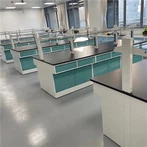
With the continuous progress of science and technology, laboratory workbench is gradually transforming from the traditional static structure to an intelligent system integrated with advanced technology. By integrating technologies such as electronic control, automation functions and data analysis, intelligent laboratory workbenches not only improve the efficiency of scientific research, but also enhance the accuracy and safety of experiments. In this paper, we will discuss the future trends of intelligent lab benches and their far-reaching impact on the research field.
Automated process control
The intelligent bench of the future will be able to automate a range of complex experimental processes, thereby reducing human error and freeing up researchers' time. For example, automated liquid handling systems can perform precise pipetting operations without human intervention.
Real-time data monitoring and analysis
Integrated sensors and cameras allow real-time monitoring of experimental conditions such as temperature, humidity, light and chemical reactions. This data can be displayed directly on the benchtop display or accessed and analyzed remotely via cloud services.
Remote Operation and Virtual Lab
Through an internet connection, researchers can remotely control lab benches and even conduct virtual experiments. This capability makes scientific research less limited by geographic location and facilitates global collaboration and knowledge sharing.
Intelligent Safety Monitoring
Intelligent workbenches will be equipped with advanced safety monitoring systems such as hazardous gas detectors and UV radiation sensors. Once a potential hazard is detected, the system can automatically trigger an alarm or emergency response measures, such as activating the ventilation system or shutting down the lab power.
Energy management and sustainability
Intelligent workbenches will be more focused on energy efficiency and environmental impact. They can reduce a lab's carbon footprint by intelligently regulating power consumption, optimizing the time lab equipment is used, and monitoring and reducing resource waste.
Personalized user experience
Using artificial intelligence and machine learning algorithms, intelligent workbenches will be able to learn the user's behavioral patterns and preference settings to provide personalized user interfaces and experiment suggestions. This will greatly improve user productivity and satisfaction.
Integrated Document and Inventory Management
The Intelligent Workbench will integrate a document management system to automatically record experimental data and operation steps, ensuring data integrity and traceability. At the same time, the inventory management system will track the use of chemicals and consumables in real time, reminding users to replenish their stocks in a timely manner.
In summary, the development of intelligent laboratory workstations will bring revolutionary changes to the field of scientific research. They will not only improve the efficiency and accuracy of experiments, but also enhance the safety and comfort of the working environment. As technology continues to evolve, the lab bench of the future will become an indispensable and intelligent partner in scientific research. #Smart Labs #Future Trends #Bench Innovation