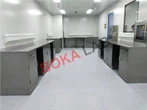
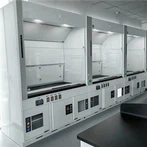
Process equipment of a typical clean medical laboratory
The air conditioning system design of clean medical laboratories should start from the calculation of indoor cooling and heating loads, understand what kind of process equipment should be arranged in various clean medical laboratories, and understand the various process links and process technical requirements of the experiment.
Experimental instruments commonly used in sterile laboratories include: constant temperature incubator, carbon dioxide incubator, ordinary refrigerator (freezer), low-temperature refrigerator (freezer), ultra-low temperature refrigerator (freezer), shaking table, centrifuge, ultra-clean workbench, laminar flow hood wait. Commonly used experimental instruments in PCR laboratories (gene amplification laboratories) include: ordinary refrigerators (freezers), low-temperature refrigerators (freezers), ultra-low temperature refrigerators (freezers), centrifuges, electrophoresis tanks, PCR instruments, ultra-clean benches, and fume hoods , biological safety cabinets, etc.
The experimental instruments commonly used in the PET Center (Positron Emission Computed Tomography Imaging Center) are: thermal chamber sub-packaging. The experimental instruments commonly used in biosafety laboratories include: constant temperature incubator, carbon dioxide incubator, ordinary refrigerator (freezer), low-temperature refrigerator (freezer), ultra-low temperature refrigerator (freezer), shaking table, centrifuge, plate washer, microplate reader, Electrophoresis tank, program cooling system, ultra-clean workbench, biological safety cabinet, laminar flow hood, movable sterilizer, single-leaf sterilizer, double-leaf sterilizer, etc.
The design of a biosafety laboratory should fully understand the hazard level of biological factors, select different protective equipment according to different hazard levels, design corresponding protective facilities, and select appropriate buildings, structures, air conditioning, water supply, power distribution and automatic control facilities.
Clean medical laboratories should design three types of streamlines: personnel streamlines, clean streamlines, and sewage streamlines. As far as possible, the flow of people and the flow of goods should be separated, especially the entrance of cleaning materials, the exit of dirt and the entrance and exit of personnel need to be set separately. In places with limited construction area, the logistics entrance and exit can be replaced by transfer windows. The human flow routes of Level 3 and Level 4 biosafety laboratories should comply with the principles of air clean technology on pollution control and physical isolation.
The transfer window used in the sterile room, PCR laboratory and PET center can be set as an ordinary transfer window, and an ultraviolet disinfection lamp is arranged in the transfer window. The transfer window used in the biosafety laboratory needs to be determined according to different laboratory levels and the installation position of the transfer window. The transfer window outside the experimental area should be well sealed and can have its own cleaning and disinfection functions. The transfer window inside the experimental area can be A common transfer window is used.